


Stephens Law Firm | April 16, 2026 | Personal Injury Law

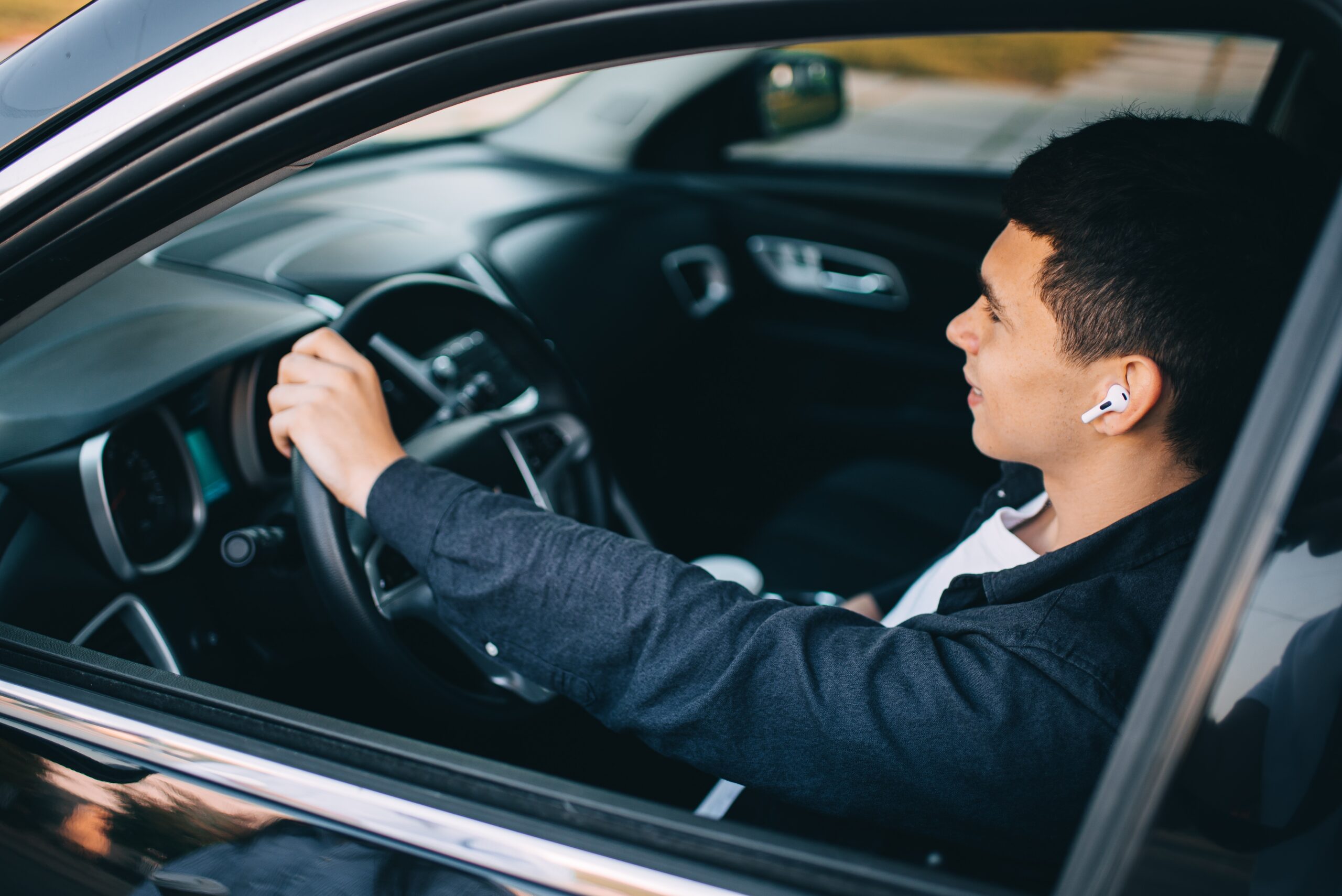
Wearing headphones while driving is not explicitly illegal under Texas state law, but that does not mean it is without legal consequence.
Texas has no statewide statute that prohibits drivers from using headphones or earbuds behind the wheel. What Texas law does address, aggressively, is distracted driving, and headphone use can feed directly into that category depending on how an accident unfolds.
That distinction matters more than most drivers realize. A behavior that is technically permitted can still be used against someone in a civil lawsuit, an insurance claim, or a police report. The line between “not illegal” and “not a problem” is thinner than it looks.
Texas law on this topic is less about what is prohibited and more about what happens when something goes wrong. That is a distinction worth knowing before it becomes relevant.
What the Law Says:
- Texas has no statewide law that prohibits wearing headphones or earbuds while driving a personal vehicle, but the absence of a specific ban does not eliminate legal risk.
- Federal law prohibits commercial drivers from wearing headsets that cover both ears, and violating that rule can establish negligence in a truck accident claim.
- Headphone use at the time of a crash can factor into how fault is assigned under Texas’s proportionate responsibility system.
- Insurance adjusters look for any behavior that reduces situational awareness, and headphone use is the kind of detail that surfaces during a claim investigation.
- Individual Texas municipalities may have local ordinances that go beyond state law, so local rules are worth verifying.
What Texas Law Says About Distracted Driving
Texas does not have a single distracted driving statute that covers every form of inattention behind the wheel. Instead, the state has targeted specific behaviors through separate laws, and the Texas Transportation Code addresses several of them directly.
The Hands-Free Law and What It Covers
In 2017, Texas enacted a statewide ban on reading, writing, or sending electronic messages on a handheld device while driving. That law, codified under the Texas Transportation Code, applies to all drivers on public roads. It does not, however, extend to headphone or earbud use.
A driver listening to music or a podcast through earbuds is not violating this statute. A driver dictating a text message through those same earbuds may be, depending on how the interaction with the device is handled.
Reckless Driving and Negligence Per Se
Even without a specific headphone law, a driver who causes an accident while wearing headphones may face civil liability under a negligence theory. Texas personal injury law allows injured parties to argue that a driver failed to exercise reasonable care, and that failure caused the crash.
Wearing headphones that blocked the driver’s ability to hear horns, sirens, or other road signals can be introduced as evidence that the driver was not paying adequate attention. Whether it rises to legal negligence depends on the full circumstances of the crash.
When Headphone Use Becomes a Legal Problem
The absence of a specific law does not protect a driver from liability if their behavior contributed to an accident. Texas follows a proportionate responsibility system, meaning that fault can be divided among multiple parties based on their respective contributions to a crash.
How Headphone Use Factors Into an Accident Claim
If an investigation reveals that a driver was wearing noise-canceling headphones and failed to respond to a warning signal before a collision, that detail does not disappear because no law was technically broken. Insurance adjusters, opposing attorneys, and juries all consider the full picture of driver behavior.
The question is not only whether a law was violated. The question is whether the driver acted as a reasonably careful person would under the same circumstances. Headphones that limit situational awareness may weaken that argument considerably.
Contributory Factors That Compound the Issue
Headphone use rarely exists in isolation during an accident investigation. When combined with other factors, such as speeding, failure to yield, or phone activity, it strengthens the case that the driver was operating without adequate attention to the road. Each layer of distraction adds weight to a negligence claim.
Special Rules for Commercial Drivers Wearing Headphones
Drivers operating commercial motor vehicles under a commercial driver’s license face a different and stricter standard. The Federal Motor Carrier Safety Administration (FMCSA) prohibits commercial drivers from wearing headsets or earphones that cover both ears while operating a commercial vehicle.
What the FMCSA Rule Allows
Commercial drivers may use a single earpiece or a headset that covers only one ear. The regulation exists to preserve the driver’s ability to hear road conditions, emergency signals, and vehicle sounds at all times. Violations can result in federal penalties and create significant liability exposure in accident litigation.
Why This Matters for Truck Accident Claims in Texas
Texas roads carry a substantial volume of commercial truck traffic, particularly along I-20 and other freight corridors through Fort Worth and Parker County. When a truck accident involves a commercial driver wearing headphones in violation of FMCSA rules, that violation can be used as evidence of negligence per se, meaning the violation itself helps establish liability without requiring additional proof that the behavior was unreasonable.
Local Ordinances: What Texas Cities May Prohibit
While Texas has no statewide headphone driving ban, individual municipalities retain authority to regulate certain driving behaviors within their jurisdiction. Local rules may differ from state law, and that gap can catch drivers off guard.
How Local Ordinances Work Alongside State Law
Cities and counties in Texas can enact traffic ordinances that go beyond what state law requires, as long as those rules do not conflict with existing state statutes. A behavior that is permitted under the Texas Transportation Code may still be regulated or restricted at the local level.
What Drivers Should Check Before Assuming They Are in the Clear
Drivers who travel regularly through different Texas cities, particularly through dense urban corridors in the Fort Worth and Dallas metro areas, should not assume that state law covers every jurisdiction they pass through. Relevant local rules to check include:
- Distracted driving ordinances: Some Texas cities have enacted broader distracted driving rules that extend beyond the state’s hands-free law.
- Noise and audio regulations: A small number of municipalities address the use of audio devices in vehicles as part of local traffic or noise codes.
- School and construction zone rules: Certain zones may carry heightened attention requirements that factor into how inattentive behavior is evaluated after a crash.
When an accident occurs in a specific city, local ordinances become part of the legal backdrop for any resulting claim. An attorney familiar with the jurisdiction can identify whether any local rules are relevant to the facts of the case.
How Headphone Use Affects an Insurance Claim
After a car accident in Texas, both drivers’ insurance companies will conduct their own investigation. Adjusters look for any behavior that might shift fault or reduce the value of a claim. Headphone use at the time of the crash is the kind of detail that surfaces in witness statements, police reports, and cell phone records.
Documentation and the Insurance Investigation
A driver who was wearing headphones may face questions about whether those headphones affected their ability to respond to the hazard that caused the crash. Even a partial finding of fault can reduce compensation under Texas’s proportionate responsibility rules.
A driver found more than 50 percent responsible for an accident is barred from recovering damages entirely.
Why the Other Driver’s Headphone Use Matters to Your Claim
If the driver who hit you was wearing headphones, that detail strengthens the argument that they were not exercising reasonable care. Preserving evidence of that behavior, through witness accounts, dashcam footage, or police report notations, supports a stronger claim for compensation.
What Compensation May Be Available After a Distracted Driving Accident
Texas law allows injured drivers to pursue compensation for a range of losses when another driver’s negligence caused the crash. Claims may include:
- Medical expenses, including emergency care, follow-up treatment, and future costs related to the injury
- Lost income and reduced earning capacity if the injury affects the ability to work
- Pain and suffering
- Property damage to the vehicle
- Emotional distress in cases involving serious or lasting injuries
The specific damages available in any case depend on the facts, the severity of the injury, and the strength of the evidence. An attorney can assess those factors after reviewing the details of the crash.
FAQ for Wearing Headphones While Driving in Texas
Can a Texas driver be ticketed for wearing headphones while driving?
Under current Texas state law, wearing headphones while driving is not a ticketable offense on its own. A driver could still be cited for related violations, such as reckless driving or improper lane change, if the headphone use contributed to dangerous behavior on the road.
Does wearing headphones affect a car insurance claim in Texas?
It can. Insurance companies investigate all factors surrounding a crash, and headphone use may be cited as evidence of inattention or reduced situational awareness. Depending on the circumstances, it could affect how fault is assigned and how compensation is calculated.
Are there any Texas cities that ban headphones while driving?
Texas municipalities have authority to enact local traffic ordinances, so rules may vary by city. Drivers should verify local regulations in any Texas city where they regularly drive, as state law sets a floor rather than a ceiling on local traffic regulations.
What should I do if the driver who hit me was wearing headphones?
Document everything you can at the scene, note whether the driver was wearing headphones in your account of the crash, and mention it to the responding officer. That detail may appear in the police report and can be relevant to establishing liability in a civil claim.
How does Texas’s proportionate responsibility rule affect my claim if I was also wearing headphones?
Texas allows injured parties to recover compensation as long as they are not found more than 50 percent at fault for the crash. If headphone use contributed to the accident on your end, it may reduce the compensation available. An attorney can assess how shared fault might affect a specific claim.
The Law Gives You a Starting Point. The Facts Determine the Outcome.
Texas law on headphones and driving is straightforward in one sense: no statute bans the practice outright for most drivers. In the context of an accident, though, the law is only part of the analysis.
How a driver’s behavior is characterized, what evidence exists, and how fault is allocated all depend on the facts of each crash.
That complexity is exactly why the period immediately after an accident matters so much. Evidence fades, witnesses move on, and the window to build a strong claim closes faster than most people expect.
If another driver’s distraction caused your accident in Fort Worth, Weatherford, or anywhere in Parker County, what would a thorough legal review of the evidence reveal about their responsibility?
Our attorneys at Stephens Law handle car accident and distracted driving claims throughout the Fort Worth area.
The consultation is free, and there is no fee unless we recover compensation for you. Call us to go over the details of your case.