

Stephens Law Firm | March 10, 2026 | Motorcycle Accidents
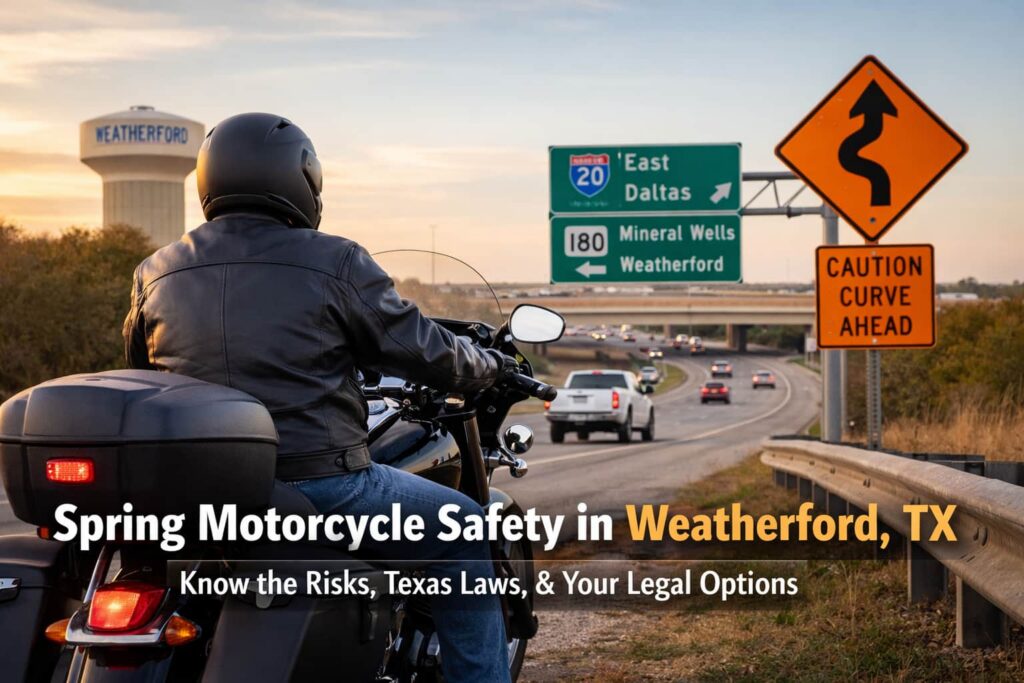
Spring riding season brings more motorcycles onto I-20, US 180, and the Parker County backroads than any other time of year, and with that increase comes more motorcycle accidents in Weatherford, TX.
For riders and their families, knowing the specific risks of spring riding, the Texas laws that apply, and what legal options exist after a crash can make a real difference.
A Weatherford motorcycle accident lawyer becomes relevant when another driver’s carelessness causes a collision and the resulting losses are significant.
The stakes are real. According to the Texas Department of Transportation (TxDOT), 581 motorcyclists lost their lives on Texas roads in 2024 and 2,534 were seriously injured. On average, one motorcyclist dies every single day in this state.
Learning the patterns behind those numbers, the legal landscape that governs riders in Texas, and how a crash claim works gives riders better tools to protect themselves on and off the road.
Spring Motorcycle Safety in Weatherford
- Seasonal risk is real: Spring is one of the most active seasons for motorcycle crashes in Texas, as more riders return to the road and more drivers fail to adjust their awareness.
- Helmet law has conditions: Texas requires all riders under 21 to wear a helmet; riders 21 and older must meet specific insurance or training criteria to legally ride without one.
- Lane splitting carries legal consequences: Lane splitting is illegal in Texas, and a rider who splits lanes at the time of a crash may face a reduced compensation claim.
- Evidence fades fast: Proving fault in a motorcycle crash often requires prompt preservation of phone records, surveillance footage, and witness accounts.
- The filing deadline matters: Texas’s two-year statute of limitations for personal injury claims means acting early protects legal options that delay forecloses.
Why Spring Is a High-Risk Season for Motorcycle Riders Near Weatherford
More Riders, Fewer Aware Drivers
When temperatures climb in Parker County and the evenings get long, motorcycles come back out in force. The challenge is that other drivers do not recalibrate their habits at the same time. A motorist who spent all winter in low-traffic conditions is not automatically watching for motorcycles when April arrives.
Research consistently shows that drivers misjudge the speed and distance of motorcycles, especially at intersections. In fact, 40 percent of motorcycle fatalities in Texas occur at intersections, and a significant share involve a driver turning left in front of an oncoming rider.
Spring, when motorcycle volume and driver inattention peak together, is when this risk is most pronounced.
The I-20 and US 180 Corridors
Weatherford sits at the intersection of some of Parker County’s most active roadways. I-20 carries high-speed commuter and freight traffic through the southern edge of the city, with merge zones and lane changes that demand constant rider attention.
US 180 heading toward Mineral Wells runs two-lane stretches with no physical barrier between opposing traffic. A left-turning driver who does not see a motorcycle on US 180 has very little time to correct that mistake.
Riders Returning After a Long Break
Spring often means resuming riding after several months off the bike. Muscle memory fades, and reaction times that felt second nature in October may take a few rides to return. A few short rides in lower-traffic areas before jumping onto I-20 during peak hours is a reasonable way to reacclimate. TxDOT’s Texas Motorcycle Safety Course also offers refresher options for riders who want to sharpen skills before the full season begins.
Texas Motorcycle Laws Every Weatherford Rider Should Know
Helmet Requirements
Texas does not require all adult riders to wear a helmet, but the conditions for riding without one are specific. Riders under 21 must wear a helmet at all times. Riders 21 and older may ride without one only if they have completed a state-approved motorcycle safety course or carry health insurance covering motorcycle-related injuries.
The data is compelling regardless of what the law requires. According to the National Highway Traffic Safety Administration (NHTSA), helmets reduce the risk of fatal injury by approximately 37 percent and prevent brain injuries in about 67 percent of crashes in which they are worn.
From a legal standpoint, riding without a helmet may affect how fault and damages are evaluated in a personal injury claim, depending on the facts of the situation.
Lane Splitting Is Illegal in Texas
Under the Texas Transportation Code, lane splitting is illegal. Riders may not operate a motorcycle between lanes of traffic moving in the same direction. Two motorcycles may legally ride side-by-side within a single lane, but weaving between vehicles is a violation. If a rider was lane splitting at the time of a crash, that behavior may be used to reduce their compensation under Texas’s comparative fault framework.
The Comparative Fault Framework in Weatherford
Texas follows a modified comparative fault rule. Riders who bear some share of responsibility for a crash may still recover compensation, provided their fault does not reach 51 percent. Below that threshold, compensation is reduced proportionally by the rider’s assigned percentage of fault.
Insurance adjusters sometimes look for rider behaviors, including lane position, speed, or helmet use, to characterize as contributing factors. Thorough documentation of the crash and the other driver’s conduct helps counter those arguments.
What Causes Most Spring Motorcycle Crashes in Parker County
Left-Turn Crashes
Left-turn crashes are among the most common and most deadly scenarios for motorcycle riders. A driver turning left at an intersection may not see an oncoming motorcycle, misjudge its speed, or assume they have time to clear the lane.
Motorcycles are narrower and less visually prominent than passenger vehicles, and drivers who are not actively looking often do not register their presence until it is too late. Wearing high-visibility gear, using a headlight at all times, and giving extra clearance at intersections reduce exposure, but they do not eliminate the responsibility of other drivers to look before turning.
Distracted Drivers and Road Hazards
Under Texas Transportation Code § 545.4251, reading, writing, or sending electronic messages while driving is illegal statewide. Even so, enforcement is limited and behavior changes slowly. A distracted driver making a turn without looking is especially dangerous for a rider, who has no steel frame, airbags, or crumple zones between them and the impact.
Road conditions add another layer of spring-specific risk. Potholes, loose gravel, and sand deposits left over from winter create hazards that barely register for passenger vehicles but can send a motorcycle into an uncontrolled slide. Reduced speed on unfamiliar stretches and awareness of changing road surfaces are practical habits for early-season rides on Parker County roads.
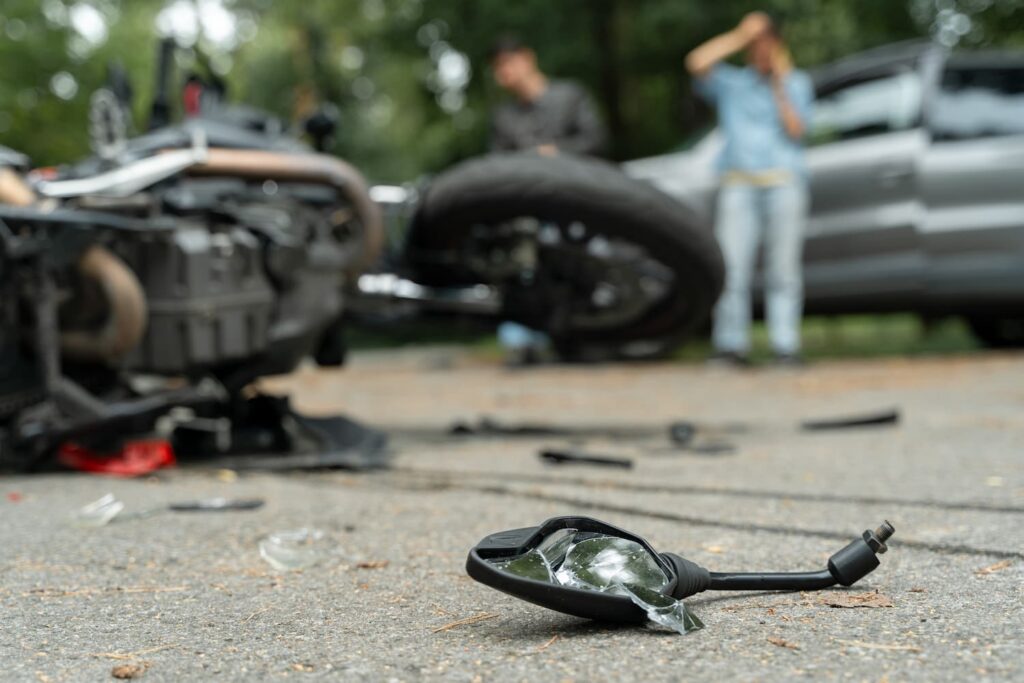
If Another Driver Caused Your Crash Near Weatherford
What the Claim Involves
When a crash results from another driver’s negligence, a motorcycle accident claim may seek compensation for:
- Medical expenses: Emergency treatment, follow-up care, rehabilitation, and any long-term care the injury requires.
- Lost income: Wages missed during recovery and, in serious cases, reduced earning capacity going forward.
- Property damage: Repair or replacement of the motorcycle and related equipment.
- Pain and suffering: The physical experience of the injury and the emotional toll that follows it.
The value of a claim depends significantly on the documentation behind each category. Medical records, repair estimates, income records, and a consistent log of how the injury affects daily life all contribute to a complete picture.
Evidence and Insurance
Surveillance footage from businesses along US 180 or near I-20 interchanges is typically overwritten within days. Skid marks change with weather and traffic. Witness recollections are sharpest immediately after a crash.
These are practical reasons to contact a Weatherford personal injury attorney soon after a collision, not because the situation demands urgency in a stressful way, but because preserving evidence requires acting before it is gone.
Insurance adjusters for the other driver represent their company’s interests, not the rider’s. Early settlement offers are designed to limit the insurer’s exposure, not reflect the full scope of losses. An attorney can manage that communication, evaluate whether any offer reflects what the claim is actually worth, and handle the process without requiring a commitment to litigation.
The Two-Year Deadline
Under Texas Civil Practice and Remedies Code § 16.003, most personal injury claims must be filed within two years of the date of injury. For wrongful death claims, the period begins on the date of death. The deadline is strict. Two years may sound sufficient, but the timeline for gathering evidence, identifying all responsible parties, and building a strong claim moves faster than most people expect.
Riding Smart on Weatherford Roads This Spring
These habits reduce exposure and strengthen a rider’s position, both physically and legally, when something goes wrong:
- Pre-season inspection: Check tires, brakes, lights, and fluid levels before the first spring ride. Motorcycles that sat through winter may have issues that are not visible without a careful look.
- Visibility gear: High-visibility jackets and reflective accessories make it easier for other drivers to register your presence, particularly in low-angle morning and evening light.
- Intersection awareness: Slow down and cover the brakes approaching any intersection. This is where the statistical risk for riders is highest.
- Ease back in: If you have not ridden in months, choose familiar roads and lower-traffic times before moving to high-speed routes like I-20.
- Refresh your training: TxDOT’s motorcycle safety courses provide practical skills for riders at every experience level, beyond just the helmet exemption benefit.
No set of habits eliminates the risk posed by other drivers, but together they reduce exposure and create a stronger foundation if a crash claim ever becomes necessary.
Frequently Asked Questions About Spring Motorcycle Safety in Weatherford
Does not wearing a helmet affect a motorcycle injury claim in Texas?
It may. If an adjuster or opposing attorney can argue that the absence of a helmet contributed to injury severity, Texas’s comparative fault rules could reduce available compensation. The specifics depend on the facts, and an attorney can evaluate how this factor applies to a given situation.
What should a rider do after a crash they did not cause?
Seek medical evaluation promptly, even when injuries seem minor. Document the scene with photos if it is safe to do so, collect witness contact information, and avoid giving recorded statements to the other driver’s insurer before consulting an attorney. Evidence fades and early statements can be used later, so protecting both matters from the start.
Can a rider recover compensation if they were slightly over the speed limit?
Possibly. Texas’s comparative fault framework allows recovery as long as the rider’s fault is below 51 percent. Speeding may reduce compensation proportionally, but whether and to what degree speed contributed to a specific crash depends on the evidence and details of the collision.
The Road Ahead
Spring riding season in Weatherford is worth looking forward to. Parker County roads on a clear morning reward a motorcycle in ways few other places match. That said, the season brings elevated risk, and the costs of a serious crash extend well beyond the immediate physical harm.
If a motorcycle crash on Parker County roads has left you or someone in your family facing serious injuries, have you considered what having informed legal guidance from the beginning could mean for how that situation unfolds?
At Stephens Law, our personal injury attorneys serve riders and families throughout the Fort Worth and Parker County area.
Consultations are free, and we work on a contingency basis with no fees unless we recover compensation for you.
Reach out by phone or via our online contact form to discuss your situation.